Advance Your Career On Your Terms
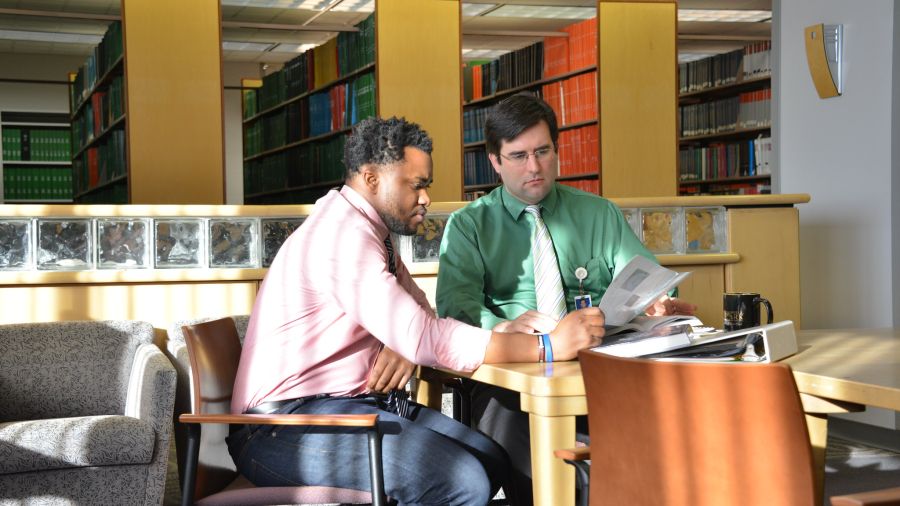
Whether you want to earn a professional certificate, build new skills, finish a degree or explore a career change, Canisius University offers continuing education and professional development programs designed for busy adult learners.
Flexible In-Person, Hybrid and Online Programs That Fit Your Life
From in-person classrooms to fully online and hybrid formats, we offer certificate and continuing education programs built around your schedule.
Learn the way that works best for you Whether that's face-to-face connection and networking or the freedom to study on your own terms, Canisius can work around you.
Explore offerings in business, education, data, technology, AI and much more.
What Is Continuing Education, and is it right for you?
Continuing education at Canisius University is professional learning designed for working adults, wherever you are in your career. Whether you're building new skills, finishing a degree, or starting over, there's a place for you here.
- Working professionals looking to advance or pivot
- Career changers exploring a new field or industry
- Learners returning to complete an unfinished degree
- Recent graduates building on their foundation
- GI Bill candidates putting their education benefits to work
- Parents returning to the workforce after time away
You don't need to have your path figured out. You just need a place to start.
How Continuing Education Boosts Your Earnings and Career
The data is clear: continuing your education pays off for all ages and timelines.
Among full-time working adults, four-year college graduates earn about 60% more than high school graduates. This wage premium that has held steady for decades. (College Board, Education Pays 2026)
Workers with a bachelor's degree earn a median of $1,541 per week, compared to $916 for high school graduates: a gap of more than $32,000 a year. (U.S. Bureau of Labor Statistics, 2024)
Over six million students ages 25 and older were enrolled in postsecondary institutions. That's proof you're in good company. (National Center for Education Statistics)
View Programs



Can I Finish the Degree I Started?
Yes. Our degree completion programs are designed for adults who previously attended college and want to return to finish their degree.
We help simplify the process by:
- Evaluating transfer credits
- Offering flexible scheduling options
- Providing academic and career support
- Creating a clear path to graduation
Why Canisius?
Canisius' career preparation, academic quality, small classes and history of caring for all people provides the proper runway to success for adult education.
- Flexibility: Canisius will work with you to build your education around your life. We offer hybrid and fully online programs, evening classes to fit any schedule, self-paced online modules for ultimate flexibility.
- Military-Friendly: Canisius has been consistently ranked a military-friendly school for over a decade, creating an environment for veterans to succeed.
- Flexible transfer credit opportunities for our undergraduate programs: We accept your past credits and can work with you on a path to completion.
- Small Classes: our classes typically range from 10 to 20 students, creating a close-knit learning environment where you can build meaningful connections with both your teachers and classmates. This personalized setting ensures you’ll receive the attention and support necessary to thrive academically.
Take the Next Step


What Resources Support Your Success at Canisius?
Canisius University brings together dedicated centers, institutes, and partnerships all focused on or learners grow and advance. Here's how we support your journey:
Canisius Adult Lifelong Learning Institute (CALLI)
- Open-enrollment adult classes available to anyone in the community
- Flexible learning designed around your schedule and interests
Center for Educator Advancement (CEA)
- Professional development courses for K–12 teachers through VESi
- Online continuing education options for licensure and skill-building
Institute for Professional Advancement (IPA)
- CFP (Certified Financial Planner) education requirement programs
- Our Centers
- Analytics and Cybersecurity training through the Canisius Center for Analytics and Data Ecosystems (CCADE)
- Frank J. Raichle Pre-Law Center
- Dr. George E. Schreiner ’43 Pre-Medical Center
- Community and entrepreneurial resources and programming through the Women's Business Center
FAQ
What's the Difference Between a Certificate and a Microcredential?
A certificate is a structured program, typically multi-course, that validates a professional skill area recognized by employers. A microcredential is a shorter, focused credential proving mastery of one specific competency. Both carry real weight in hiring and promotion decisions, and both are available fully online through Canisius.
Note: Currently Canisius does not offer microcredentials but they are currently in development. Check back here or our social media channels for updates.
Can I take continuing education courses online?
Yes, our programs are available in flexible formats designed to fit your schedule. Program formats vary by subject and level, but most are offered in online or hybrid formats. This allows you to balance your education with work, family, and other commitments while still gaining the skills you need to move forward.
How do I choose the right continuing education program for my career?
- Start with your goal - First, identify the field you want to grow or transition into. Look for programs that directly align with in-demand roles in that area and teach skills employers are actively seeking.
- Assess your current experience - Your educational background and work experience matter. Undergraduate certificates are ideal if you’re building foundational knowledge, while advanced certificates are better suited for those ready for graduate-level work.
- Think about time and flexibility - Consider how much time you can realistically commit. Semester-based programs offer structure, while microcredentials provide shorter, more flexible options for immediate skill-building.
- Ask for guidance - You don’t have to decide alone. Connecting with an advisor can help you map your options and choose a path aligned with your career goals
Are continuing education courses accredited?
Yes, continuing education courses can be accredited, depending on the type of program.
- For-credit programs, such as undergraduate certificates and advanced (graduate-level) certificates are part of the university’s accredited academic offerings. This means they meet the same academic standards as degree programs, and the credits you earn may be applied toward a future degree.
- Non-credit offerings, such as microcredentials, may not carry academic credit, but they are still designed to meet industry standards and provide relevant, high-quality skill development.
- CTLE (Continuing Teacher and Leader Education) programs are aligned with state requirements and count toward maintaining professional certification.
Is advising available?
Yes, both course advising and career advising are available to support you throughout your continuing education journey.
How much do continuing education courses cost?
- Certificate Programs - Charged undergraduate tuition per credit rate. Total cost depends on the number of credits required.
- Advanced Certificates - Charged at the graduate tuition rate, which varies by program. Total cost depends on the number of credits required.
Contact the office of student services for more cost information:
E-mail: studentservices@canisius.edu
Phone: (716) 888-2600
How long does it take to complete a continuing education program?
The time it takes to complete a continuing education program depends on the type of program and the pace you choose.
- Certificate Programs - Typically completed in less than 1 year when taken part-time
- Advanced Certificates - Often completed in less than 1 to 1.5 years, when taken part-time
- Microcredentials - Self-paced and designed for flexibility, most can be completed in a few weeks to a few months, depending on the topic and your availability.
- CTLE (Continuing Teacher and Leader Education) - Varies by course, but many can be completed in a few days to a few weeks, depending on the format and required hours.