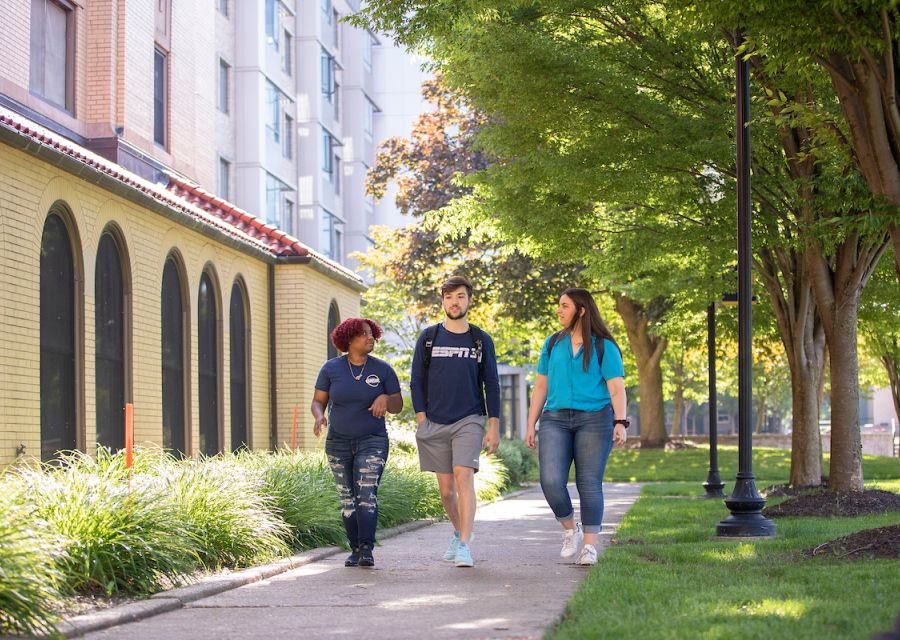
When Maxine Ensminger ’29 arrived at Canisius University, she was adjusting to college life just like many other first-year students. The workload was heavier, the campus was new and learning how to navigate college came with its share of challenges.
But in her First-Year Experience (FYE101) course, Ensminger found something that made the transition easier: a community of peers who were figuring it out alongside her.
“Taking a class with fellow freshmen helped me understand that I was not alone during the challenging transition from high school to college,” says Ensminger, a history major with a minor in art history. “Everyone was finding it difficult.”
Today, Ensminger is a peer mentor, helping the next class of Griffs make that same transition. Her journey from first-year student to mentor reflects what Canisius University hopes to accomplish through FYE: to prepare students for academic success, help them find a sense of belonging and give them the confidence to take an active role in their education.
Building a foundation for student success
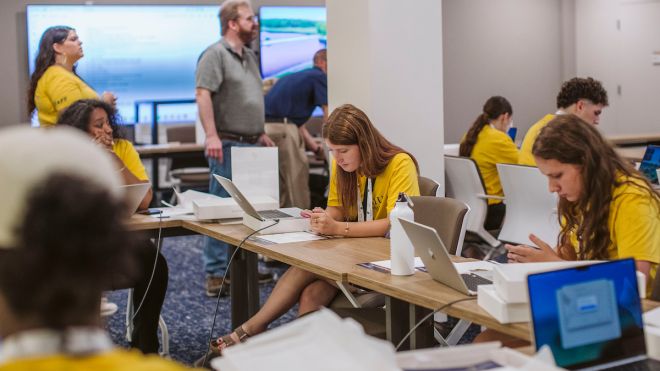
A required one-credit course, FYE introduces students to college-level academic skills, campus resources and the habits that support success. Classes are grouped primarily by major, allowing students to learn alongside peers with similar academic interests while building connections across the university.
The course is part of Canisius' broader commitment to student success through the Answer the Call strategic plan, which includes the aim for every undergraduate to complete at least three high-impact educational experiences before graduation. As of 2026, 100% of first-year students participate in FYE, making it an important starting point for that goal.
“Requiring all first-year students to take FYE as a graduation requirement is incredibly impactful,” says Julie Marzolf, director of Academic Achievement & Success Coaching in the Golisano Center for Student Success. “It prepares students for the rigors of college while providing structured support as they transition to a new environment. It also assists in building a community, helps acclimate them to the Canisius community and equips them with transferrable skills regardless of their majors.”
For many students, FYE is their first high-impact experience. It introduces them to the academic potential and personal growth that will shape their time at Canisius.
“FYE helps develop teamwork through regular partner or group work at the top of class, as well as a final group project at the end of the semester. Students also develop critical thinking, public speaking and study skills, along with hands on learning experience,” adds Marzolf.
From high school to college: Learning how to succeed
The transition to college involves more than learning a new campus. Students face increased reading and writing, changing schedules, new responsibilities and the expectation that much of their academic work happens outside the classroom.
FYE helps students develop the skills to meet those expectations. Through discussions, group work and practical assignments, students learn time management, note-taking, study strategies, how to think critically and how to communicate.
Elizabeth Turner ’04, MsEd ’08, director of Educational Partnerships in Teacher Education & Leadership Studies, has been an FYE instructor for four years. She sees students grow from unsure newcomers into more confident members of the Canisius community.
“At the beginning, everything is new — classrooms abbreviations, how to communicate with a professor and how to navigate the Canisius portal,” Turner says. “By the end of FYE, students are having conversations with their advisors, know how to use the library and are branching out to engage in campus-wide events.”
Communication is one of the most important skills students practice in FYE. Small class sizes encourage participation, while assignments give students opportunities to write professional emails to professors and learn how to advocate for themselves.
“Students are in the driver's seat of their education now,” Turner says. “FYE gives them a place to practice those skills and learn how to chart their own course.”
Finding community and a place to belong
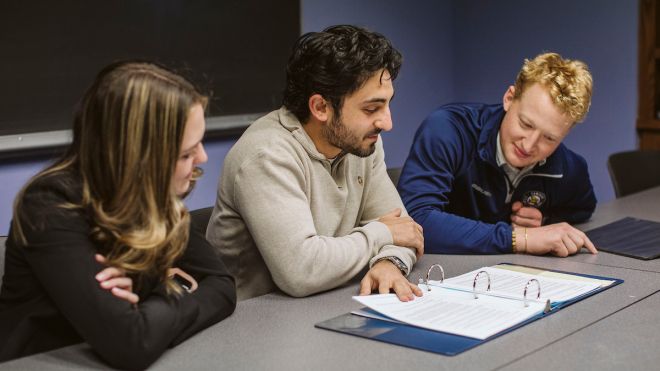
FYE is also designed to help students feel connected to Canisius from the beginning. Group activities, classroom discussions and a final group project encourage students to build relationships with their peers.
Luca Militello BS ’23, MS ’25, a graduate admissions counselor at Canisius, teaches FYE and sees the difference those relationships make.
“From the first class, students are timid and unfamiliar with one another,” Militello says. “By the end, they are creating friendships and new relationships.”
The course also encourages students to explore the university beyond the classroom. Through a “Going Beyond the Classroom” assignment, students attend at least two on-campus activities and document their experiences. The assignment helps students discover opportunities to become engaged in campus life and build connections outside their academic programs.
For Militello, those connections are central to the university experience.
“One of the goals of FYE is to create a community; that’s what Canisius is all about,” he says. “When former students stop to say hello or wave in the hallways, I know they understand what the Canisius community is like.”
Supporting the whole student
The First-Year Experience also reflects the Jesuit value of cura personalis, or care for the whole person. Academic skills are taught alongside conversations about wellness, belonging and personal growth.
Marzolf says reflective prompts at the beginning of each class encourage students to consider their accomplishments, challenges and opportunities for growth.
“FYE aims to support students holistically through academic skill building, community and belonging, and overall wellness,” Marzolf says.
Those conversations about wellness are especially important as students adjust to the demands of college.
“Being able to provide stress-relief habits and ways to relate those habits to their schoolwork is important,” says Militello. “Being burned out because of schoolwork can bring added stress. By developing those habits, students can take and apply them to their academic work.”
For Turner, caring for students means being part of their journey well beyond their first semester.
“I get to see how their interests change over time based on their field experiences,” she says. “I love being a small part of their journey. We are caring for the whole student and walking along their journey with them.”
Peer mentors provide another layer of support. They share their own experiences, offer practical advice and help students feel comfortable asking questions.
For Ensminger, her peer mentor experience has shown her that leadership is about more than taking charge.
“Becoming a peer mentor has helped me grow as a leader by teaching me how to communicate effectively, listen to others and become a dependable source of support,” she says. “There is more to leadership than simply being in charge. It is also about being a positive example.”
Preparing students for what's next
FYE introduces students to the habits and mindset they will carry into future high-impact experiences, from research and internships to leadership and study abroad. Through teamwork, hands-on learning and opportunities to engage with campus resources, students begin building the confidence to pursue those opportunities.
Militello also encourages students to embrace magis, the Jesuit value of striving for more or greater.
“I tell students to take a class you may have never thought you would take, or get involved in research,” he says. “I want students to be more involved both in and outside the classroom.”
The impact of FYE continues beyond the first semester. Many students who complete the course later apply to become peer mentors, eager to help new students navigate college. Marzolf says those students often take on other leadership roles across campus.
For Ensminger, mentoring is an opportunity to make the transition easier for someone else. “What makes this experience so meaningful to me is knowing that I can make a difference in a student's transition to college,” she says.
From the first day on campus to the experiences that follow, Canisius' First-Year Experience gives students a foundation for academic achievement, personal growth and lifelong learning. It is the beginning of a journey that helps every Griff discover the support, skills and confidence to thrive. Learn more about the First-Year Experience at Canisius University.