
When recent graduate Michaela Staskiewicz '26 traveled to Costa Rica during her senior year, she was still weighing whether her future belonged in healthcare or education. The experience gave her an opportunity to test those interests.
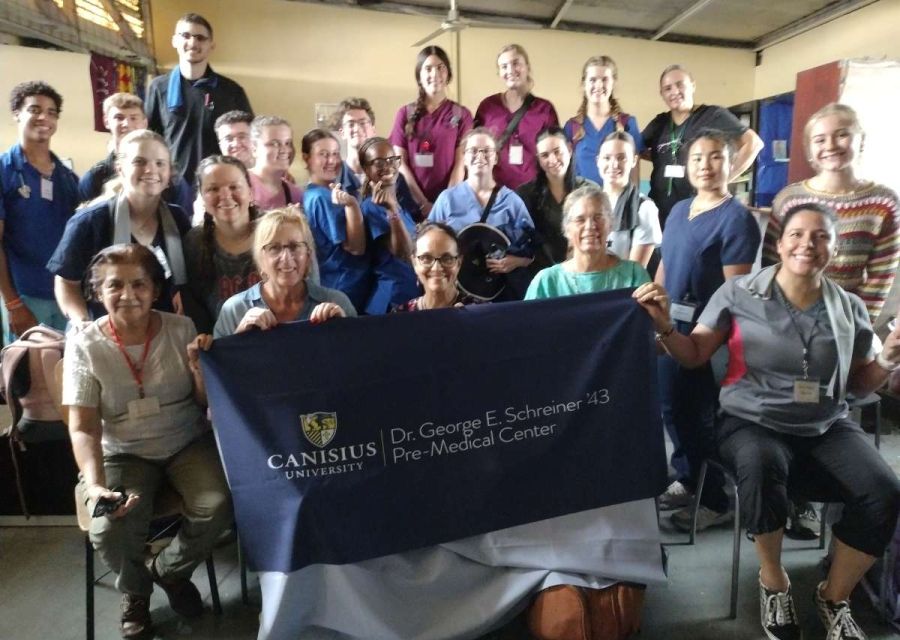
Staskiewicz was one of 11 students and recent graduates who traveled to Costa Rica as part of the university's longstanding service-learning program, an experiential learning opportunity that combines healthcare outreach, cultural immersion and reflection. Working alongside healthcare professionals in community clinics, students assist with patient intake, visit families in their homes and observe firsthand how social, political and economic conditions shape health outcomes.
“I learned that I really enjoy the investigative part,” said Staskiewicz, who conducted patient interviews, gathered medical histories and prepared physicians for appointments. The experience revealed one of her favorite aspects of medicine. "Asking patients probing questions to get to the bottom of why they are feeling the way they are was something I really enjoyed and found incredibly fulfilling."
The experience not only increased Staskiewicz's confidence, but also revealed how closely her interests in medicine and education were intertwined. "It helped me better understand the role of a medical assistant and confirmed how much I enjoy interacting with patients," she said. "Treating patients is about more than diagnosing and prescribing," she said. "Successful healthcare also requires educating patients about their health and helping them understand their own bodies."
Staskiewicz's experience reflects what Canisius University's Costa Rica service-learning program has done for students for more than a decade: help them discover their purpose while connecting classroom learning with compassionate service.
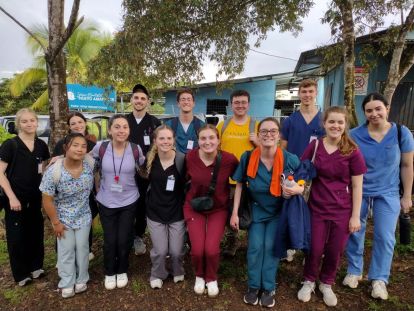
For nearly two weeks each spring, classrooms give way to community clinics and textbooks are replaced by patient conversations as Canisius University students learn lessons that can't be taught on campus. The Costa Rica program has been a hallmark of Canisius University's commitment to experiential learning and Jesuit education for more than a decade, helping students connect what they learn in the classroom with the realities of caring for others.
Led by Allyson Backstrom, PhD, director of the Dr. George E. Schreiner '43 Pre-Medical Center, the program challenges students to see healthcare through a broader lens while exploring future careers rooted in service. "Students return with a better understanding of themselves, their interests and how they want to make a difference in the world," said Backstrom. "That's one of the greatest outcomes of the trip."
Backstrom said the experience often broadens students' perspectives, exposing them to career paths and opportunities. She noted that for two recent graduates pursuing veterinary careers, the trip offered opportunities to work with large animals and tropical species, complementing the small-animal experience they had already gained in preparation for veterinary school.
Another participant discovered an unexpected interest in food-animal medicine and began exploring career opportunities with the U.S. Department of Agriculture. "It opened her eyes to professional pathways she hadn't previously considered," Backstrom said.
Carrying The Lessons Foward
Beyond the clinics, students explored one of the defining principles of a Jesuit education: cura personalis, or care for the whole person. Many of the patients they served had fled political unrest, economic instability or violence in neighboring countries. Through discussions with refugees, interpreters and community leaders, students gained a deeper understanding of the circumstances that force families to leave their homes.
"We try to create opportunities for students to learn about the situations that lead people to migrate, and the efforts individuals make to improve circumstances for others," Backstrom said.
For Bailey Clarke '29, a rising sophomore studying pre-medicine, the experience reshaped his understanding of what it means to be a physician. "I'll never forget how far such a simple gesture took me in connecting with a person," Clarke said. "It reminded me that as a healthcare professional, you're working in service of your patients. Your own reservations and ego are secondary to the needs of the person you're caring for."
The experience also brought classroom concepts to life. "The idea of social determinants of health had come up in my classes," Clarke said. "But seeing those concepts reflected in real life gave me an entirely new perspective on the role of a doctor."
For Staskiewicz, home visits into underserved communities reinforced the importance of understanding each patient's individual circumstances before offering care. "Seeing poverty firsthand made everything tangible," she said. "It showed me that caring for people, whether medically or otherwise, is about more than giving treatment in isolation. It's about cura personalis—taking the time to understand the whole person and the situations surrounding them."
From Experience to Purpose
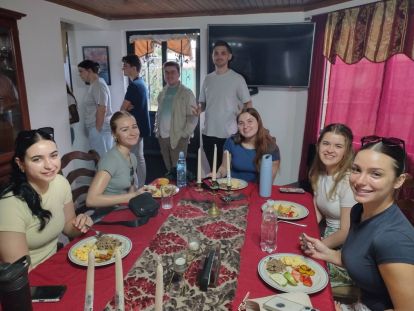
Students immersed themselves in Costa Rican culture by living with local host families, an experience Backstrom said was especially memorable for this year's group. "Students always enjoy the homestays, but this group was especially enthusiastic," she said. "Living with families gives them a much richer understanding of Costa Rican life and culture."
One of the trip's most meaningful experiences took place at a migrant shelter near the Nicaragua-Costa Rica border, where students participated in a foot-washing service for individuals making the difficult journey north. The simple act created opportunities for conversation, compassion and human connection. "We were able to hear people's stories while offering them a small act of care," Backstrom said.
This year's trip also welcomed Carol Cullinan, director of the Canisius University's Griff Center for Student Success, who joined the program to better understand how students can communicate the value of service-learning experiences during job searches and graduate school interviews. Backstrom hopes the collaboration will help students more effectively articulate the leadership, adaptability and intercultural skills they develop through immersive experiences like Costa Rica.
Backstrom said the impact of the program extends well beyond the two weeks students spend abroad. Many participants have gone on to careers in medicine, veterinary science and other helping professions, carrying the lessons they learned in Costa Rica into their professional lives.
For Clarke, the experience strengthened his desire to combine medicine with social justice. "I've wanted to incorporate social justice into my work as a physician for a long time," Clarke said. "This experience showed me that I don't have to wait. No matter where my future leads, I know I'll continue helping people and advocating for those who need it."
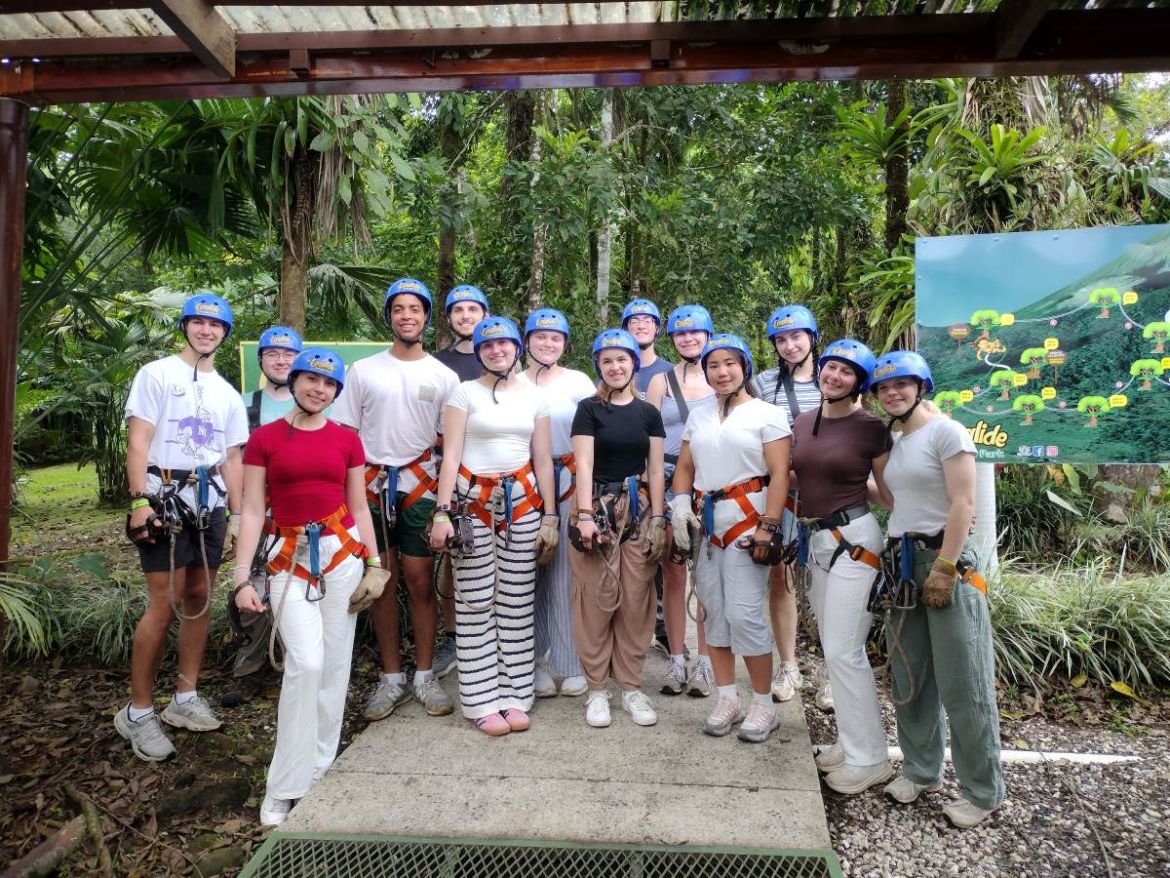
Now in its second decade, the Costa Rica service-learning program continues to exemplify the Canisius approach to education—one that pairs academic excellence with meaningful service, global engagement and reflection. Through experiences that challenge students to grow personally and professionally, Canisius prepares graduates not only for successful careers but for lives dedicated to serving others.