
Over winter break (Jan. 4-10), a group of Canisius University students stepped beyond the classroom to engage in one of the most complex issues of our time: migration.
Students traveled to El Paso, TX, as part of the Border Awareness Experience (BAE), an immersive program led by Caroline King, assistant director of campus ministry in the Office of Mission and Ministry.
The group included Matthew Braden ’27, Robert Chan ’26, Andrew Crooks ’26, Saige Crainer ’27, Brianna Forzani ’27, Adam Golden ’26, Danait Mebrahtom ’26, Onyeka Osuji ’27, Madison Smith ’28 and Kayla Vandewater ’28. The cohort represented students from a wide range of academic majors.
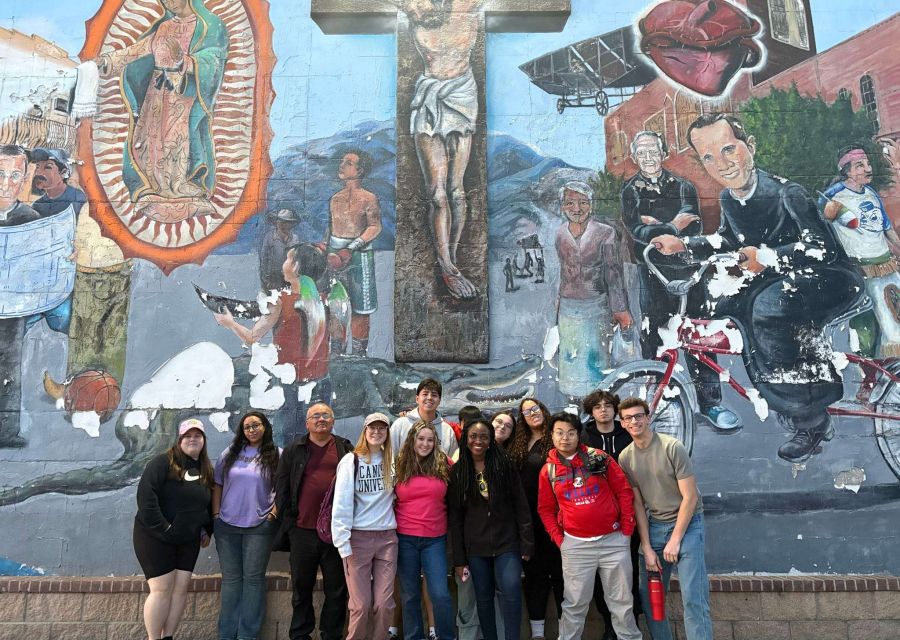
[PHOTO: Students participating in Canisius University’s Border Awareness Experience stand in front of a mural outside Sacred Heart Church in El Paso.]
For some students, the experience carried deep personal significance. Onyeka Osuji ’27, a graduate student in higher education leadership and administration who arrived in the United States in August 2025 on a student visa, said her motivation to go on the trip stemmed from both curiosity and lived experience.
“The issue of U.S. migration is a serious topic that affects me directly,” Osuji said. “I wanted to gain more perspective on it.”
Andrew Crooks ’26 said, "Canisius offered an incredible opportunity for students to travel and learn," adding that he was drawn to the program by the chance to explore El Paso’s culture and learn about migration.
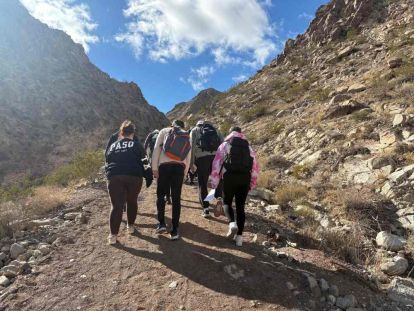
Designed to move past headlines and statistics, the Border Awareness Experience places students directly within the lived realities of the U.S.–Mexico border. Hosted by Annunciation House, a network of hospitality houses in El Paso, participants lived alongside migrants and refugees, sharing meals, daily responsibilities and reflection.
“The primary goal of the Border Awareness Experience is to immerse participants in the lived realities of the border region,” King said. “Rather than learning from a distance, students encounter immigration issues firsthand through relationships, dialogue and reflection.”
Learning Through Relationship
For Crooks, a mathematics and data science major, living in a house of hospitality made the experience deeply personal.
“Without living there, I could never have understood the depth of their stories, goals and aspirations,” Crooks said. “As the week went on, we became closer — especially to the children. We learned about their dreams for the future.”
Crooks added that the combination of shared living, cultural immersion and personal encounters made the experience unlike anything he could have learned through coursework alone. He recalled meeting a woman who fled extreme violence in South America and had lived peacefully in the U.S. for years before facing deportation.
“With all she’s been through, I don’t understand what other criteria is needed to let someone stay,” he said. “It really forced me to question how we approach asylum and justice.”
A Holistic View of the Border
Annunciation House tailored the group’s schedule to include encounters with migrants, nonprofit leaders, legal advocates, community organizers and authorities, including a former U.S. Border Patrol officer. Students also visited federal court, offering insight into how immigration cases move through the legal system.
“Exposure to many perspectives challenged students to think critically and holistically about a complex issue,” King said. “Nightly reflections helped them process what they experienced each day.”
Osuji said a presentation by former Border Patrol officer Michael DeBruhl was especially impactful. “He showed that many common narratives about migration are myths,” Osuji said. “The data showed crime rates actually decrease as immigration increases, which challenged assumptions I’d heard for years.”
Beyond Stereotypes
Students also visited the border wall and spoke with residents who live alongside it, learning how migration and border policy affect daily life.
“In El Paso, people are proud of both their American and Mexican heritage,” Crooks said. “It’s unsettling to see how a single wall divides communities.”
Osuji said the experience reinforced the importance of approaching migration with empathy and openness. “They were decent, kind people with optimism and dreams,” she said. “This experience taught me to look beyond walls, stereotypes and political narratives and simply see people as fellow humans.”
Lasting Impact
Throughout the week, advocacy emerged as a central theme, particularly during a conversation with Annunciation House founder Ruben Garcia.
“Students were challenged to think about how they can use their voices for good,” King said. “Advocacy can take many forms, but it always begins with listening,” she added.
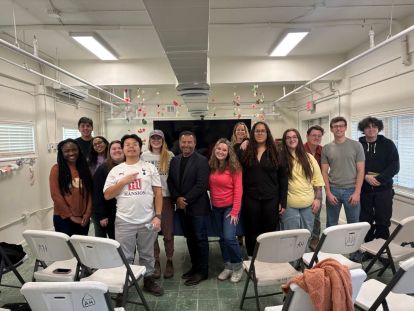
King believes the Border Awareness Experience will continue to shape students’ perspectives long after they return to campus.
“Regardless of major, students gained skills in empathy, intercultural understanding and critical thinking,” she said. “Those lessons will influence how they approach their future careers and communities.”
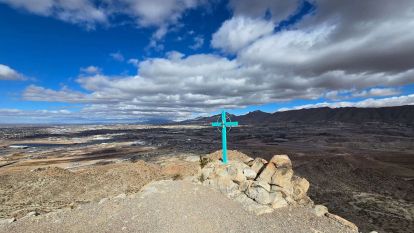
Reflecting on the week, Osuji also encouraged other students to consider participating in future Border Awareness Experiences. “Go on the trip — it’s a worthwhile experience,” she said. “There are sad stories to learn from, but there are also beautiful smiles of resilience to draw strength from. And the weather, colors, mountains and views in El Paso were breathtaking.”