

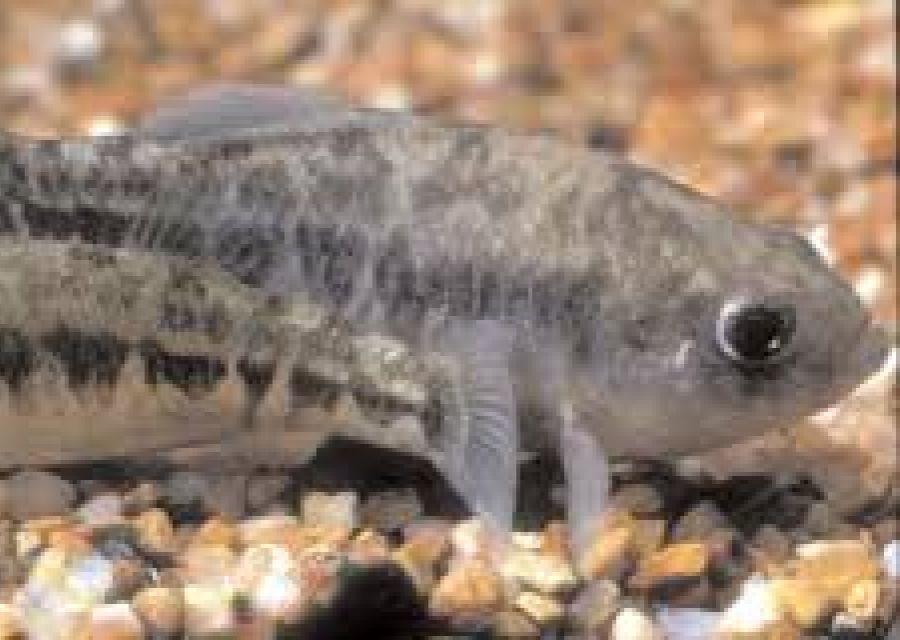
Buffalo, NY - Jennifer Snekser, PhD, associate professor and co-chair of Animal Behavior, Ecology, and Conservation at Canisius University, has published new research revealing that endangered Leon Springs pupfish adjust their territorial behavior based on reproductive success. The study, published in the journal Behaviour and titled "Nocturnal and diurnal territorial activity in the Leon Springs pupfish, Cyprinodon bovinus," found that male pupfish who successfully mate during the day abandon their territories at night, while less successful males continue defending their territories after dark—apparently seeking to improve future mating opportunities.
Drawing on more than two decades of research on this endangered desert fish, Snekser and her collaborators uncovered a previously undocumented pattern of territorial behavior. While territorial defense in pupfish has long been associated with daytime reproductive activity, the study revealed that some male Leon Springs pupfish continue to defend their territories throughout the night—while others do not.
These territories play a critical role in reproduction, serving as sites where females lay eggs and where males protect them from potential egg predators. The researchers found that male pupfish adjust their behavior based on their daytime reproductive success. Males that successfully attracted and spawned with multiple females during the day typically abandoned territorial defense at night. In contrast, males that experienced less reproductive success during daylight hours continued to defend their territories after twilight, seemingly in an effort to improve future mating opportunities.
The findings suggest that male pupfish assess their own reproductive success and flexibly adjust their behavior in response—an insight that adds important nuance to our understanding of animal decision-making and behavioral ecology.
This research builds on Snekser’s long-standing program in integrative behavioral ecology and underscores the importance of detailed behavioral observation and field experimentation. Such work is essential for uncovering behavioral processes that can inform conservation and recovery strategies for endangered species like the Leon Springs pupfish.
The full article can be read here.