
Buffalo, NY – Neil Chace ’26, an animal behavior, ecology and conservation (ABEC) major at Canisius University has co-authored a new study with Biology and ABEC Professor Susan W. Margulis, PhD, as part of the school’s Team Ape research group. Their paper, “Space Use Preferences and Species Proximity in a Mixed-Species Zoo Monkey Exhibit,” was published in the Journal of Zoological and Botanical Gardens.
Undergraduate Research Leads to Published Study
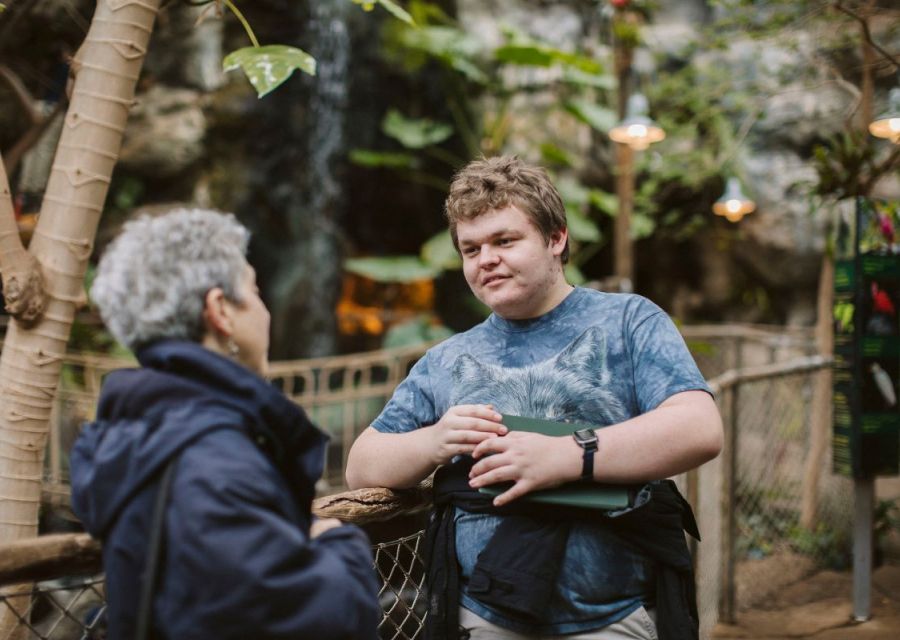
The study examined the behavior of three New World monkey species—white-faced sakis, black-capped squirrel monkeys and common squirrel monkeys—housed together in a mixed-species exhibit at the Buffalo Zoo’s M&T Bank Rainforest Falls. Over the course of a year, Chace and Margulis analyzed how the monkeys shared space and interacted with one another, offering insights into both the benefits and challenges of mixed-species zoo habitats.
Key findings show that the squirrel monkeys utilized more of the exhibit space than the sakis, while the sakis spent more time in close proximity or contact with one another compared to the other species. Notably, when housed alone, the sakis used more of the exhibit, suggesting that species combinations influence how animals interact with their environment.
Animal Behavior Students Receive Real-World Experience
“Mixed-species exhibits can provide animals with more complex, enriching environments, but they also require careful planning,” Margulis said. “Our research shows that the presence of other species can subtly shift space use and social behavior in ways that may impact welfare.”
For Chace, the project was both a scholarly and professional milestone.
“Conducting this research gave me a deeper appreciation of how zoo design influences animal behavior and welfare,” he said. “It also provided invaluable experience as I prepare for graduate studies and a career in zoological science.”
The findings add to a growing body of research on zoo exhibit design and animal welfare. They also highlight Canisius University’s commitment to involving undergraduates in meaningful scientific inquiry. To read the full paper, click here.
Animal Behavior Program Among Top in Nation
The Animal Behavior, Ecology and Conservation undergraduate major at Canisius University empowers students to follow their passion for animals within an ethically grounded, research-driven curriculum. Established in 2009 as the first program in the U.S. to formally integrate moral and ethical considerations into animal and wildlife studies, ABEC emphasizes immersive, hands-on learning from the very first year. Students benefit from small-class environments, field and lab experiences—such as working with foster kittens in the Animal Learning Lab and collaborating with partner zoos, aquariums, and conservation organizations—and opportunities to design and conduct original research that often culminates in presentations and peer-reviewed publications. The program is nationally recognized for its unique blend of behavioral science, animal welfare, and conservation education, and boasts the largest ABEC major of its kind in the country.
Founded in 1870 in Buffalo, NY, Canisius is one of 27 Jesuit colleges and universities in the U.S. Consistently ranked among the top institutions in the Northeast, Canisius offers undergraduate, graduate and pre-professional programs distinguished by close student-faculty collaboration, mentoring and an emphasis on ethical, purpose-driven leadership.