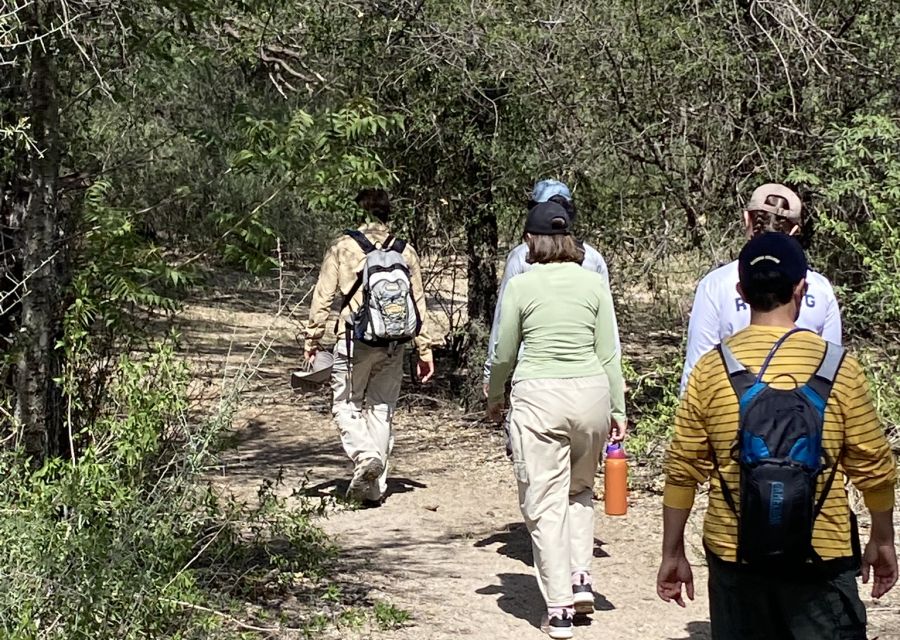
Buffalo, NY - The mid-August sun beats down on the Buenos Aires National Wildlife Refuge near the U.S.-Mexico border in Arizona. Canisius’ Richard D. Reitsma, PhD, is on a two-mile hike with students Kaitlin O’Meara ‘26, Mackenzie Jordan Harmon ‘26, Gabriel Rodríguez León ‘26 and co-leader Davide Salvo, PhD.
The purpose of the hike? To give students a sense of what migrants might experience when crossing the desert.
“It’s to make it real,” said Reitsma, “It’s for students to feel the challenges migrants face, like how quickly water runs out and how disorienting the desert can be,” he added.
The hike was one of several experiences on an itinerary planned by the Kino Border Initiative (KBI), a faith-based organization that provides “humanitarian aid and holistic accompaniment” to migrants in Nogales, Arizona and in Nogales, Sonora, Mexico where the Kino shelter is located.
Named for Eusebio Francisco Kino, SJ, an Italian Jesuit missionary, KBI relies on the goodwill of organizations and people to participate in the initiative.
“It’s based on relationships cultivated over time,” said Reitsma. “It’s to make students aware of the complex situation, to engage them in meaningful ways beyond film or textbooks, and to get them to see the realities of migration.”
Photo: Hiking through the Buenos Aires National Wildlife Refuge with Iñigo, education coordinator at the Kino Border Initiative.
From classroom to career: Immersive, hands-on learning experiences help prepare undergraduates for real-world success
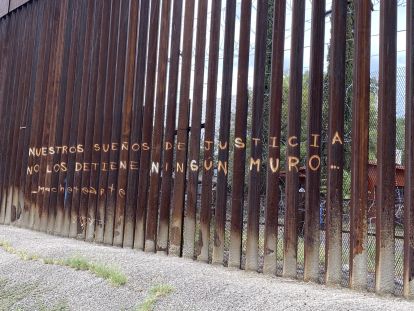
Reitsma noted that the experience has profoundly affected past participants. Some have gone on to become immigration lawyers, work in nonprofits, or pursued careers in education. Canisius student Kaitlin O’Meara joined the trip because she felt it would be an insightful experience.
“When the opportunity arose, I knew I had to take advantage of it,” she said.
This trip helped O’Meara realize that she wants to work in immigration and advocacy.
“I interned at Journey’s End Refugee Services this summer. Between these two experiences, I realized that this is what I want to do,” she said.
For her, speaking with the travelers was the most moving part of the trip.
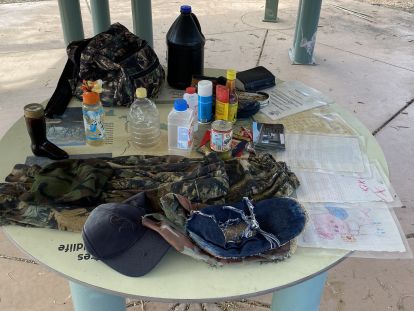
“We heard stories of crossing, deportation, and the long wait to reunite with family. What struck me most was how much hope they still hold—reminding us that even in bleak situations, there’s always room for hope” she said.
Gabriel Rodriguez Leon was motivated to join because he wanted to better understand migration issues of the southern border.
“Studying international relations and political science, it’s difficult to understand migration through textbooks and news alone — especially with all the misinformation and dehumanizing rhetoric surrounding the issue. I wanted to understand the realities of migration and border issues from a human perspective,” he said.
Like O’Meara, Leon said the experience strengthened his commitment to social justice and human rights and will influence his career path.
For him, speaking with the migrants was the most impactful too.
“Listening to their testimonies about why they were deported to Nogales, Mexico, and who they left behind in the U.S. made it really emotional for me,” he said. “But amidst all these obstacles they are still hopeful about the future.”
Inside the journey: Experiential learning trips give students firsthand insight into issues
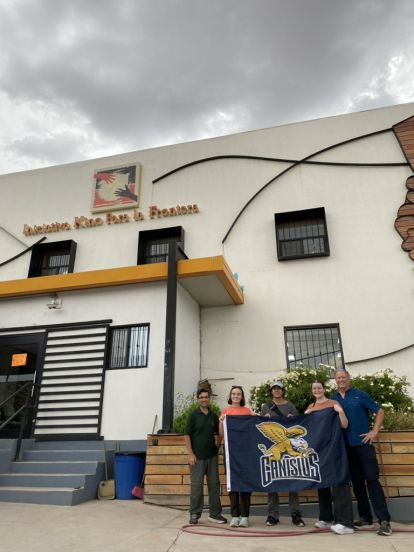
In addition to the hike, the thoughtfully planned itinerary offered students a comprehensive, firsthand understanding of the challenges and realities faced by migrants. Here’s a summary:
• A conversation with co-editors Sr. Engracia ME and Tobin Hasen, PhD about the book “Voices of the Border.” Reitsma said this conversation helped humanize the situation through the stories of the migrants in the book. “It gives voice to the migrants,” he said.
• A meeting with ranchers living on the border. Reitsma said this was the challenging portion of the trip, but necessary for students to get a well-rounded understanding of the border situation by those directly impacted.
• A visit to Federal District Court. “Students witnessed migrants wearing orange jumpsuits brought out in groups of 30-50, chained at wrists, waists, ankles, and charged in groups of six to plead individually guilty or not guilty to what is essentially a petty misdemeanor,” said Reitsma.
• A meeting with a federal court judge. This meeting helped students see the judge’s human side. The judge noted he understood why migrants flee poverty and violence, and that he would do the same in their position. But Reitsma said, “He also said his hands are tied because the law is narrow and strict, with no room for nuance.”
• A visit with the medical examiner. “This was probably the most important visit for everyone,” said Reitsma. “It’s to see the ‘maps of death’ and the images of bodies in various stages of desert decay. It’s about understanding that discovered bodies are only a fraction of those who die, and how forensic examiners work to identify remains and bring answers to desperate families.”
• Conversation with a migrant. Although many migrants are hesitant to speak, students met with a man deported after decades in the U.S., leaving a wife and U.S.-citizen children. Reitsma said that these conversations can be difficult but often touch on things like food and music. “It reminds us that despite desperation, we are all humans living a shared experience.”
• Visits to Tumacácori Mission and the San Xavier del Bac Mission. While Tumacácori stands as a historic ruin, it illustrates the legacy of Fr. Kino and longstanding patterns of human movement. In contrast, the still-active San Xavier del Bac—described by Reitsma as “rising like an oasis of white out of the scrubland of the desert”—helps students contextualize the borderlands as a place of cultural contact and enduring hope.
• Visit to Tumacácori National Park and the Tohono O’odham nation. The visit to the park was essential to understanding that migration has been constant throughout history. The Tohono O’odham, a Native American tribe of the Sonoran Desert, live on ancestral land that spans both the U.S. and Mexico. “It reminds us that that borders are artificial in that they are political creations,” he said.
• Preparing, serving and sharing meals with migrants. Reitsma noted that it’s important for students to break bread over a shared experience—and to understand, in a visceral way, what that truly means.
“Breaking bread, sharing a meal, is in fact, pretty much how Christ started and ended his mission on earth, from the wine at the wedding feast in Cana to the Last Supper which is now reenacted as mass,” he said.
Understanding migration with compassion: Preparing the next generation of future leaders
Reitsma stressed that it’s imperative for people to understand why migration happens.
“It’s the historical contexts of migration and what the realities are, not just the performative staging and rhetoric spouted on both sides of the political debate.”
He added, “And that means educating ourselves, taking classes, serving local communities, being informed, and falling in love with the world, because even when it is a hard, cruel, and difficult place, there is always hope.”
To learn more about the KINO Border Initiative, click here.
Join the public discussion with Dr. Richard Reitsma and students about their experience:
Conversation with Kino Border Initiative
Monday, Oct. 6, 5-6:15 p.m., Free
Richard E. Winter ’42 Student Center, Grupp Fireside Lounge
Dr. Reitsma is Associate Professor, Department of Modern Languages, Literatures & Cultures and Founder/Director Borders & Migrations Initiative & LatinX/LGBTQ Speakers Series.