
Buffalo, NY - Canisius University Biology Professor Robert Grebenok, PhD, is part of an interdisciplinary team awarded a three-year, $750,000 grant from the United States Department of Agriculture (USDA). Funding will support research to identify how crop plants can naturally defend themselves against herbivorous insects while reducing reliance on chemical pesticides.
“Prior to work done in this research area over the past 30 years, crop plants were chiefly protected from insect attack by chemical pesticides, many of which build up in the ground water and are believed to contribute to disease in humans,” says Grebenok. “Through our research, we hope to identify additional ways to assist plants in maintaining their health while reducing or eliminating pesticide use.”
Grebenok explains that insects cannot make their own cholesterol and must convert what sterols they find in their food to cholesterol to properly develop. The team’s research aims to manipulate the structure of sterols to generate plants that use the modified versions to protect themselves against insect herbivores.
“We are interested in forcing herbivorous insects to choose weeds as food source by causing important crop plants to produce more of the modified sterols and, as a result, be of little dietary use to insect herbivores,” explains Grebenok. This approach, he adds, “protects crops naturally without killing insects thereby preserving the balance of the ecosystem while reducing pesticide use.”
Grebenok’s interdisciplinary team is comprised of faculty researchers, farmers, postdoctoral research associates, graduate and undergraduate students at Texas A&M University and the Cotton Growers Association Inc. Canisius University biology and animal behavior, ecology and conservation (ABEC) students are also active contributors.
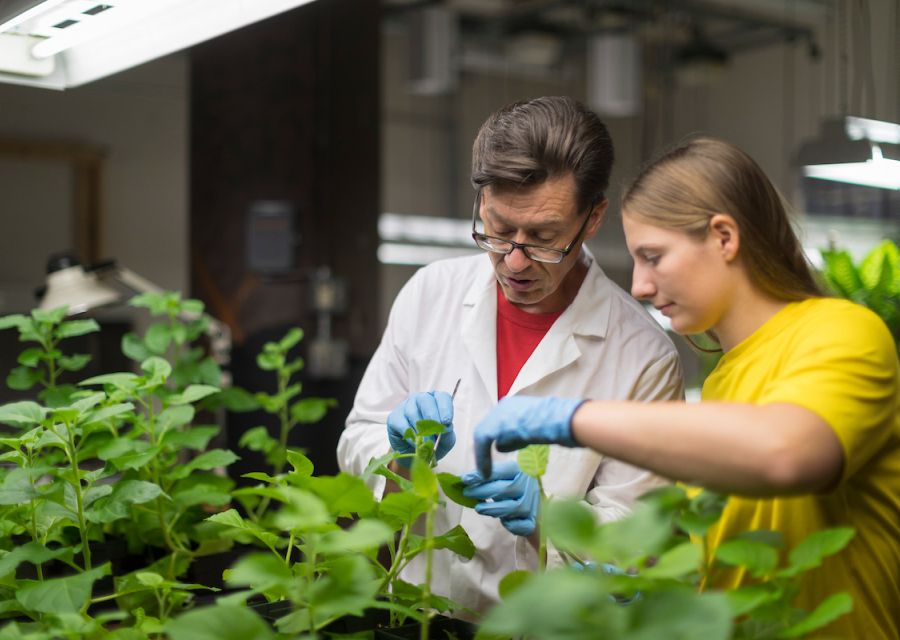
“Our undergraduate students are true collaborators in this work,” adds Grebenok. “They are conducting experiments, assisting with data analysis, and analyzing the chemical composition and chemical changes of crop plants. Most importantly, they are learning how to interact effectively as a vital part of an interdisciplinary research team.”
A higher plant biochemist and physiologist, Grebenok studies how higher plants protect themselves against insects. He and his research teams have conducted plant, insect and ecosystem interaction research for three decades and have secured 11 federal grants.
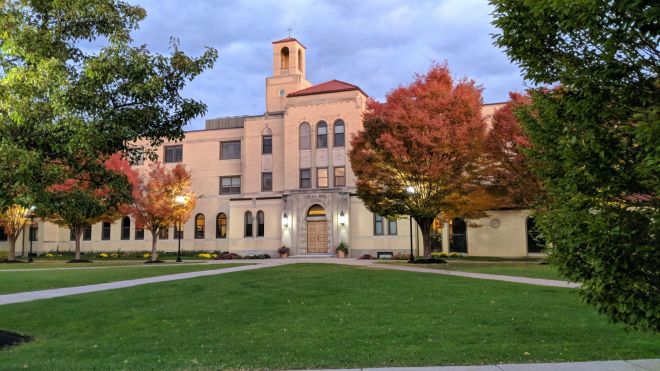
Canisius was founded in 1870 in Buffalo, NY, and is one of 27 Jesuit colleges and universities in the U.S. Consistently ranked among the top institutions in the Northeast, Canisius offers undergraduate, graduate and pre-professional programs distinguished by close student-faculty collaboration, mentoring and an emphasis on ethical, purpose-driven leadership.