

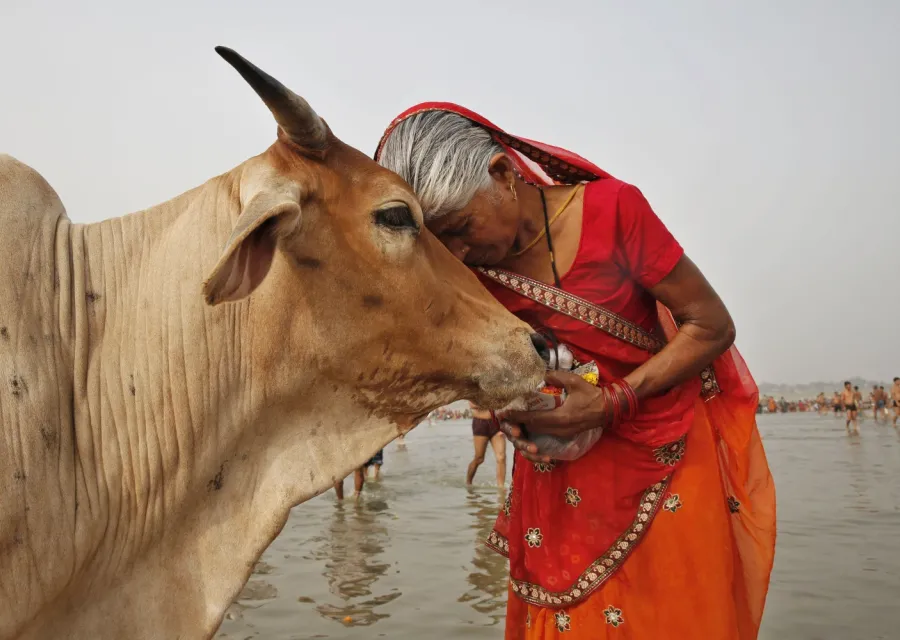
Buffalo, NY—Dr. Chirantana Mathkari, assistant professor of animal behavior, ecology, and conservation and anthrozoology at Canisius University, has published a new research article examining how cultural and religious beliefs influence dairy consumption in India.
The article, “The ‘Cultured’ Cow: Analyzing the Role of the Cow’s Acclaimed Holiness in Indians’ Dairy Consumption Intentions,” appears in Animals [2026, 16(5)], an international, peer-reviewed, open access journal dedicated to the study of animals. The paper is featured in the journal’s special issue, “The Invisible Bond: How Animals Shape Human Society.”
Dr. Mathkari’s research explores how the cultural and religious reverence of cows in India—one of the world’s largest producers and consumers of milk—affects individuals’ intentions to consume dairy products. The study finds that social perceptions play a significant role in shaping consumption behaviors, particularly among individuals who consider the cow sacred.
The findings suggest that dairy consumption in India is not solely a matter of nutrition or economics but is deeply embedded in cultural and religious contexts. Among those who revere the cow, social influences on dairy consumption are especially pronounced, reinforcing the idea that consuming cow-derived products is part of a broader, culturally shaped social practice.
Dr. Mathkari introduces the concept of the “culturalization” of the Indian dairy cow, highlighting how cows are both symbolically integrated into traditions and materially cultivated for milk production. This dual role underscores the complex relationships between humans, animals, and food systems.
The research contributes to a growing body of scholarship examining the interconnectedness of culture, religion, and human–animal interactions, and opens new avenues for exploring how societal values influence agricultural practices and consumption patterns.
The full article is available open access at: https://www.mdpi.com/2076-2615/16/5/769