As demand grows for professionals who can connect people with science, history, culture and the environment, Canisius University is preparing the next generation of educators through its online Museum, Cultural and Environmental Education master’s program.
Designed for those passionate about storytelling, community engagement and lifelong learning, the program equips students with the tools to create meaningful educational experiences that prepare them for careers in museums, zoos, aquariums, parks and nonprofit organizations.
“Many of these spaces are places people visit for leisure—but they also want to learn,” says Joshua Russell, PhD, associate professor and program director. “Educators play a critical role in shaping a visitor’s experience. Guided by Canisius’ Answer the Call strategic plan, our goal is to fully prepare students to be able to design programs that are engaging, accessible and impactful for all audiences.”
Meeting the Moment in a Growing Field
According to the U.S. Bureau of Labor Statistics, careers in museums, zoos, aquariums, parks and cultural and nonprofit institutions reflect steady to strong demand across related occupations. Museum roles such as archivists, curators and technicians are projected to grow by 3% to 6%, education and community-based roles by 5% to 7%, and animal care and zoo-related positions by 8% to 16%. Together, these trends underscore growing opportunities for professionals who translate science, culture and heritage into meaningful public learning experiences.
The program is ideal for students seeking a museum studies graduate program, an environmental education master’s degree or careers in nonprofit and cultural education. The Canisius program blends theory with hands-on application, preparing students for roles in:
• Museum and gallery education
• Environmental and conservation programming
• Zoo and aquarium interpretation
• Cultural and heritage organizations
• Nonprofit leadership and outreach
Through coursework in program development, storytelling, evaluation and grant writing, students graduate with practical, resume-ready skills that align with today’s job market.
Learning Beyond the Classroom Through Flexible, Career-Focused Online Learning
At the core of the program is a focus on how people learn in informal settings—an approach that builds on the program’s foundation.
Students explore how storytelling can shape understanding.
“Stories are what connect people to ideas,” Russell explains. “Whether it’s the history of an artifact, the journey of a species or an individual’s story—such as that of a Holocaust survivor—those narratives make learning meaningful and memorable.” Through this coursework, students develop the skills needed to tell these stories across their careers.
Offered fully online, this program allows students to pursue their degree from anywhere while balancing professional and personal commitments. Courses are designed to be both flexible and interactive, with opportunities to collaborate and build connections with peers across the country.
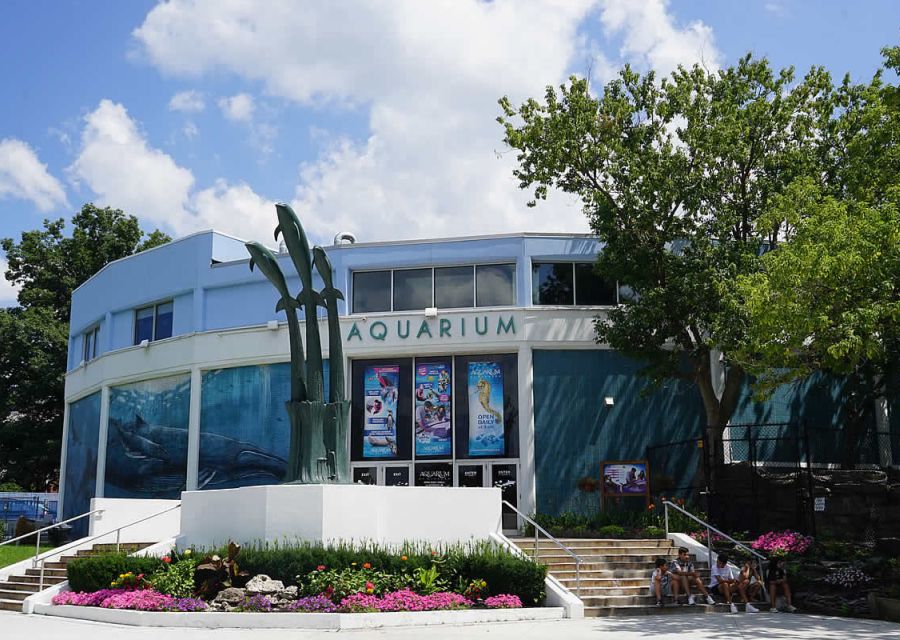
Russell says a key strength of the program is its growing network of partnerships with organizations such as the Buffalo Zoo and Aquarium of Niagara, with plans to expand both regionally and nationally. These partnerships create direct career pathways for students by offering opportunities for internships and professional experience, and for the employees of partner organizations, tuition discounts.
Students also learn from faculty who are active professionals, while building connections through a growing alumni network. These relationships help position graduates for success in a competitive and evolving job market.
Through internships, capstone projects and applied coursework, students graduate with a professional portfolio, real-world experience and the networks needed to launch or advance careers in museum education, environmental education and nonprofit leadership.
From Passion to Profession
For Peyton Koukides ’26, the program is helping turn a lifelong interest in animals into a meaningful career path. “Through my undergraduate experience, I discovered how much I loved the education side of environmental science,” she says. “My internship at the Aquarium of Niagara really solidified that for me.”
Now in the program, she is already gaining practical experience. She hopes to become an environmental educator, designing programs that inspire others to care about conservation and the natural world. “We’ve done projects that I’ll be able to apply directly to future jobs and build into a portfolio,” Koukides says. “That’s been incredibly valuable.”
A Purpose-Driven Path
Rooted in Canisius University’s Jesuit values, the program emphasizes cura personalis—care for the whole person—through individualized advising and opportunities for students to tailor their coursework to their interests. “Each student has an opportunity to approach each assignment from their own perspective and with their own goals,” says Russell.
Graduates leave prepared not only with technical skills, but with a deeper understanding of how to engage diverse audiences and create inclusive learning environments. The program also introduces students to career paths they may not have previously considered.
“For students with a passion for history, science, the arts, animals or communication, careers in education can extend far beyond the traditional K–12 classroom,” says Russell. “These roles offer the opportunity to work with audiences of all ages who are genuinely eager to learn—sharing stories, science, history and culture in ways that are engaging and meaningful every day.”
Many of the roles graduates enter are mission-driven and values-based, offering work that is both socially and environmentally impactful. “It’s a field that gives you a real sense of purpose,” Russell adds. “You’re helping people connect with the world around them—and that carries meaning not just in your career, but beyond it.”