
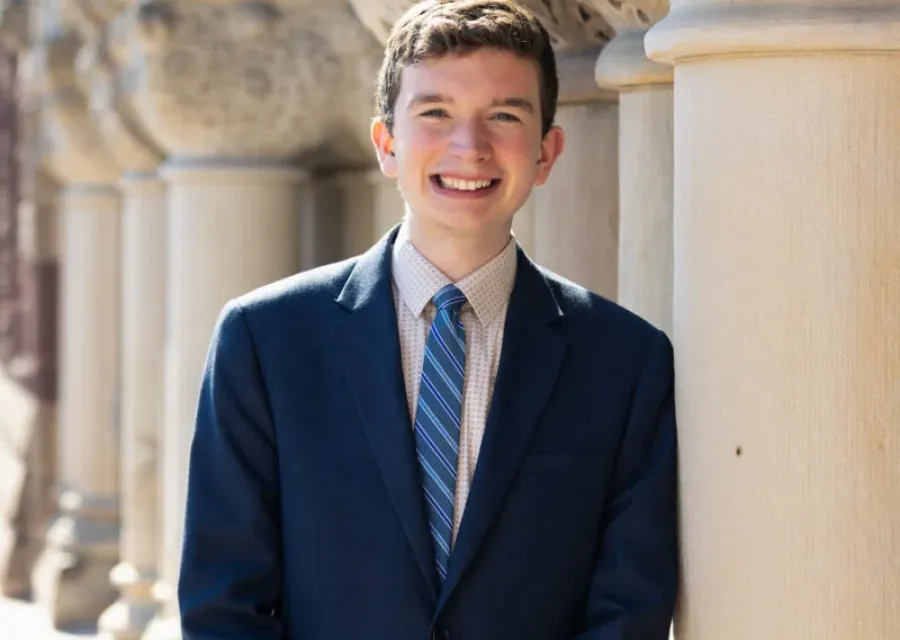
When Patrick Healy '23 arrived at Canisius University, he didn't have a detailed plan for becoming a lawyer. What he found instead was something that would shape every step that followed: a community that recognized his potential, challenged him to grow and provided opportunities to lead.
Today, Healy is a graduate of Harvard Law School, where he earned his juris doctor after building an impressive record of leadership, service and campus involvement. Yet he says the blueprint for that success was created long before he arrived in Cambridge.
"My Canisius experience was transformative," Healy said. "Canisius faculty saw potential in me and encouraged me to pursue it."
Faculty members opened doors almost immediately.
His first-year American Constitution professor, Stacey Moar ’06, encouraged him to connect with the Raichle Pre-Law Center. Through the center, Healy learned about internships, received guidance on courses that would help him explore the legal profession and secured a paid research opportunity through the Canisius Earning Excellence Program, which facilitates student collaboration with faculty mentors.
That opportunity allowed Healy to move beyond the classroom and contribute to meaningful scholarly research.
As an assistant for Peter Canisius Distinguished Teaching Professor Bruce Dierenfield, PhD, Healy researched civil rights activist and martyr George W. Lee for Dierenfield's forthcoming biography. The experience strengthened his confidence as both a scholar and researcher.
"My confidence blossomed as leading lawyers like professors Moar and [former Raichle Director] Robert Klump, and esteemed academics like Dr. Dierenfield, took me seriously," Healy said.
Those relationships extended well beyond the classroom. Healy met alumni working throughout the legal profession, including judges, private attorneys and government lawyers who helped him understand the profession while providing mentorship and career advice.
"Our professors set high expectations, but these were not abstract," he said. "Though I was obviously their junior, they treated me as an equal and prepared me to take advantage of future opportunities."
Learning Through Leadership
While academics provided a strong foundation, Healy says his experiences across campus were equally transformative.
He immersed himself in student life, serving with The Griffin student newspaper and taking on leadership roles in Model United Nations and Phi Alpha Delta Law Fraternity. He also participated in leadership retreats and Kairos spiritual retreats, experiences that helped shape both his leadership style and sense of purpose.
Rather than choosing activities to build a résumé, he chose organizations that genuinely interested him.
"I realized there was no one way to succeed," Healy said. "Classmates seemed to do things because they wanted to, not to impress anyone. I joined what I wanted, and I became a leader simply by learning from predecessors and earning the trust of classmates."
Those experiences helped him discover both his strengths and his purpose. "Whether it was the interpersonal reflection we did at the Kairos, the teamwork I learned through experiences like the leadership retreat, or talking to alumni about where I might fit in the workforce, I learned what actually motivated me and where I could contribute."
One lesson proved especially important. After applying to become editor-in-chief of The Griffin and not being selected, Healy reconsidered what leadership truly meant. "I realized that, at least at Canisius, your reputation matters more than your résumé," he said. "I learned to support the editor-in-chief and lead and inspire our staff without the formal title I had hoped for." That shift in perspective became the foundation for his approach to leadership.
A Blueprint That Translated to Harvard
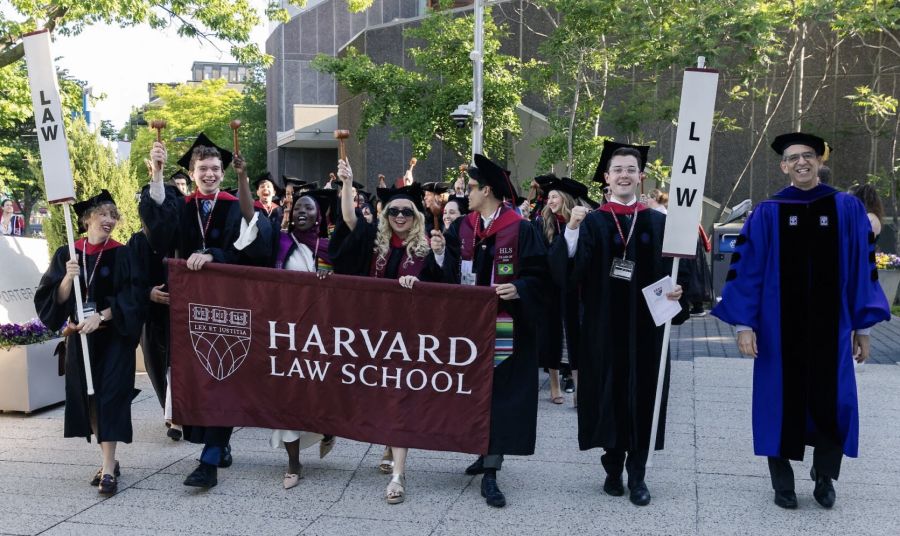
When Healy arrived at Harvard Law School, he intentionally followed the same formula that had served him so well at Canisius. Rather than focusing on prestige or class rankings, he looked for ways to contribute to the community around him. "I simply started doing what needed to be done," he said.
He became involved in student government, organized social events, mentored other students and embraced leadership roles that others often overlooked. "I never really felt imposter syndrome at Harvard because I didn't judge myself based on my class ranking," he said. "Instead, I judged myself based on things I could control: how hard I worked, how well I listened to classmates and how devoted I was to clients."
He credits his Canisius education for preparing him academically as well. His studies in political science, philosophy and the liberal arts strengthened his writing, critical thinking and analytical abilities while teaching him to examine issues from multiple perspectives.
"It seems to me that the best lawyers are not those who are best at convincing others, but those who are best at being convinced," Healy said. "Up to that point, I learned how to be a lawyer more at Canisius than in law school."
He believes those skills are becoming even more valuable as artificial intelligence reshapes the legal profession. "Success will turn not on producing information, but on parsing information," he said. "I think my liberal arts education at Canisius will help me do that."
Living the Jesuit Mission
Throughout his time at Canisius, Healy experienced the university's Jesuit commitment to cura personalis, or care for the whole person. "Canisius is a place where people remember your name," he said.
He recalls returning to campus this summer to study for the North Carolina bar exam and being greeted by librarians who remembered him years after graduation. That sense of belonging shaped the kind of leader he wanted to become. "I learned from Canisius that the antidote to awkwardness is an apology, not apathy," he said. "One problem with the world is loneliness, and that won't be solved if we don't take risks for each other."
He says faculty, staff and classmates modeled what servant leadership looks like and inspired him to invest in others, regardless of title or position. "The people I met at Canisius are thoughtful in how they diagnose problems in the world and dedicated in how they walk the talk of changing it."
Building a Career of Service
Following graduation from Harvard Law School, Healy began a two-year Equal Justice Works Fellowship with Legal Aid of North Carolina, representing clients who otherwise could not afford legal representation while helping expand technology tools that improve access to legal services.
His commitment to public service reflects values first nurtured at Canisius. "Leadership provides the deeper satisfaction of giving others opportunities for them to grow themselves," he said.
For current and future Golden Griffins, Healy offers simple advice. "Start small," he said. "I realized that I was more likely to actually change things at Canisius and that, in doing so, I could learn how to make changes wherever I went after."
He encourages students to become involved, lead meetings, listen carefully and embrace opportunities to make a difference. "Nobody will solve the problems our generation faces for us," he said. "We can only do it if we learn from each other."
For Healy, that lesson began at Canisius University—where mentorship, meaningful relationships and a commitment to serving others became the foundation for everything that followed.
Read more about Healy in this Student Spotlight Harvard Law Today article.